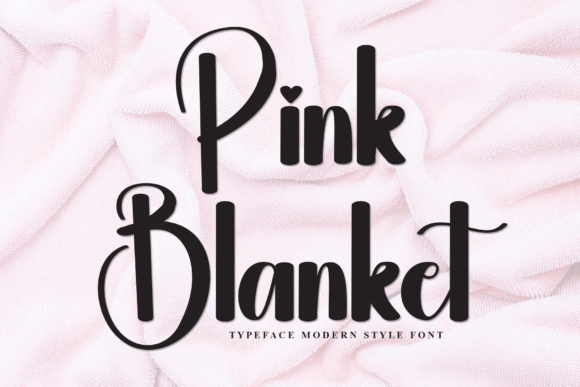
Discover the Whimsy of Pink Blanket Font
There's a particular kind of design challenge that calls for something beyond standard serifs and predictable sans serifs. You're crafting a wedding invitation that needs to feel personal and joyful. You're designing a logo for a boutique bakery that should radiate warmth. You're creating social media graphics for a lifestyle brand that wants to connect on a human level. In these moments, you need a typeface that carries personality without sacrificing clarity. That's where Pink Blanket enters the conversation—a handwritten display font that manages to be both playful and polished.
At first glance, Pink Blanket feels like a conversation with a friend who has beautiful handwriting. The letterforms flow with a natural, organic rhythm that avoids the stiffness of digitally constructed scripts. Each character carries subtle variations in stroke weight and baseline placement, mimicking the authentic imperfections of hand-lettering. The overall effect is sweet without being saccharine, friendly without feeling amateurish. There's a confidence in its casualness that makes it surprisingly versatile across different design contexts.
Where This Handwritten Font Truly Shines
Pink Blanket finds its strongest footing in projects where emotional connection matters as much as visual impact. Wedding stationery is an obvious home for this typeface—the gentle curves and approachable character complement romantic themes beautifully. Think save-the-date cards, ceremony programs, and table numbers that feel handcrafted rather than mass-produced. The font brings that same warmth to greeting cards, whether you're designing for a commercial card line or creating personalized holiday greetings.
But limiting Pink Blanket to purely romantic applications would miss its broader potential. This creative font works remarkably well for:
- Brand identity for small businesses in wellness, beauty, food, and lifestyle sectors
- Packaging design for artisan products, handmade goods, and specialty items
- Editorial design including magazine pull quotes, chapter headings, and blog graphics
- Social media graphics where personality and engagement drive performance
- Web design accents like call-to-action buttons, testimonial highlights, and decorative headers
The font carries enough visual weight to function as a headline typeface while maintaining readability at moderate sizes. It's not suited for body copy—few display fonts are—but it excels in short, impactful text blocks where you want personality to take center stage.
Understanding Its Place in Modern Typography
Every typeface makes a statement about the brand or message it represents. Pink Blanket communicates approachability, creativity, and warmth. When a bakery uses it on their packaging, customers subconsciously associate those qualities with the product inside. When a blogger uses it for section headers, readers feel a more personal connection to the content. This isn't magic—it's the psychology of typography at work.
The handwritten style signals authenticity in an era where consumers increasingly value human connection over corporate polish. However, context matters enormously. Pink Blanket wouldn't serve a law firm or financial institution well. Its personality is too casual for contexts demanding gravitas and authority. Understanding where a premium font like this fits—and where it doesn't—is part of developing good design judgment.
Practical Guidance for Using Pink Blanket Effectively
Before committing to any typeface for a project, test it thoroughly. Set your actual headlines and key phrases in Pink Blanket rather than relying on the standard preview text. Evaluate how specific letter combinations look in your context—the word "wedding" might read beautifully while another word creates awkward spacing. Check performance at the sizes you'll actually use, both on screen and in print if applicable.
Font pairing is where many designers stumble with expressive typefaces. Pink Blanket benefits from contrast. Pair it with a clean sans serif font for body text—something like a geometric or humanist sans serif that won't compete for attention. A classic serif font can also work well if you're aiming for a more sophisticated aesthetic. The key principle: let Pink Blanket own the spotlight while supporting typefaces handle the quieter work.
Consider the practical details that separate professional typography from amateur experimentation:
- Review what's included with your license—does the font offer alternate characters, ligatures, or stylistic sets that expand your creative options?
- Test kerning and spacing in your specific applications, adjusting as needed for optimal readability
- Verify commercial licensing covers your intended use, whether that's client work, product sales, or digital distribution
- Evaluate how the typeface renders across different platforms and devices if your project includes digital applications
Building Consistency Across Touchpoints
One of the most valuable things a distinctive typeface offers is recognition. When a brand uses Pink Blanket consistently across their website headers, Instagram graphics, product labels, and printed materials, that font becomes part of their visual language. Customers begin to associate the typeface with the brand before they even read the words. This kind of typographic consistency strengthens brand identity in ways that generic, widely-available fonts simply cannot.
That said, restraint matters. Using Pink Blanket for every text element would overwhelm a design and dilute its impact. Reserve it for moments where you want to create emphasis or emotional resonance. Let it announce a headline, highlight a testimonial, or personalize a call to action. Then step back and let your secondary typeface do the supporting work. This hierarchy creates visual breathing room and actually amplifies the handwritten font's charm.
Making the Decision for Your Next Project
Choosing a typeface is ultimately about fit. Does Pink Blanket align with the personality you're trying to communicate? Does it serve the functional requirements of your project—readability at your intended sizes, appropriate tone for your audience, compatibility with your design system? These questions matter more than whether you find a font aesthetically pleasing in isolation.
For designers, entrepreneurs, and creators working on projects that benefit from a human, approachable touch, Pink Blanket is a strong addition to your collection of design assets. It won't replace your workhorse serif font or your go-to sans serif, but it fills a specific niche that those typefaces can't. Used thoughtfully, it brings genuine warmth and personality to wedding invitations, brand identities, social media content, and countless other applications where connecting with people matters most.