Diy Game: A Chubby Slab Serif for Playful Branding
Understanding the Visual DNA of Diy Game
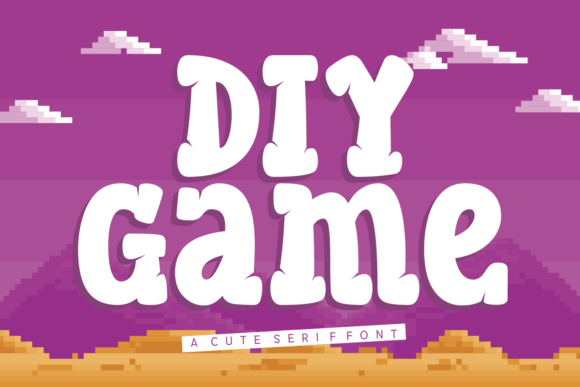
When you first encounter the Diy Game typeface, the immediate impression is one of approachable strength. It is classified as a chubby, playful slab serif font, which places it in a unique category of modern typography. Unlike traditional, rigid slab serifs that feel industrial or heavy, Diy Game softens the edges. The characters are wide, bubbly, and feature distinct, blocky serifs that give the letters grounding without making them look aggressive. It balances the structural integrity of a serif with the friendly curvature of a rounded sans. For designers and creators, this specific visual weight is invaluable. It captures attention instantly because it takes up space both physically on the canvas and psychologically in the viewer's mind. It doesn't whisper; it speaks with a confident, cheerful tone.
The personality of this creative font is undeniably youthful and energetic. However, "youthful" does not necessarily mean "childish." In the realm of display font design, roundness is often associated with safety, trust, and friendliness. Think of the psychology behind major tech and food brands that utilize rounded geometry. Diy Game taps into that same psychology but adds a typographic "snap" with its serifs. This makes it a versatile design asset for projects that need to feel handmade or artisanal but still require high legibility. Whether you are working on a digital interface or a physical product, the visual texture of this font adds a layer of tactile warmth that crisp, geometric sans serifs often lack.
Strategic Applications: Where Diy Game Fits Best
The true test of any premium font is its adaptability across different mediums. Diy Game excels in environments where hierarchy needs to be established quickly and memorably. In packaging design, for instance, this typeface shines. Imagine a shelf full of minimalist, thin-line competitors. A product utilizing Diy Game for its logo or flavor text will pop off the shelf. The "chubby" nature of the letters ensures readability even from a distance, which is critical for physical retail environments. It works exceptionally well for food products, children’s apparel, pet supplies, or any brand that wants to project an image of wholesome quality.
Beyond physical goods, the digital landscape is equally receptive to this style. Social media graphics are consumed rapidly, and users often scroll past text-heavy posts. Using Diy Game for headlines on Instagram carousels, Pinterest pins, or TikTok overlays can stop the scroll. Its distinct style acts as a visual anchor. For web design, while it may be too stylized for long-form body text, it serves as a perfect hero font for landing pages, specifically for call-to-action buttons or section headers. It invites the user to engage, making the digital experience feel less sterile and more human.
Editorial and Print Projects
For those in publishing, Diy Game offers a fresh alternative to standard display serifs. In editorial design, such as magazine covers or book dust jackets, the font can convey genre instantly. It is particularly effective for lifestyle magazines, cookbooks, or humor sections. The wide stance of the characters creates a bold masthead that feels substantial. Furthermore, in the realm of personal crafting—such as fabric prints, tote bags, or vinyl decals—the font’s outlines are clean enough to be cut by machines like Cricut or Silhouette without jagged edges. This makes it a practical choice for hobbyists who need a commercial font that translates well from screen to physical material.
Refining Your Design with Typography Principles
Choosing a font is only half the battle; implementing it effectively is where the expertise lies. Diy Game influences visual hierarchy by its sheer presence. Because it is a display font, it commands the top tier of your hierarchy. It should be used sparingly and with intent. If you use it for every sentence, the design will feel cluttered and heavy. Instead, use Diy Game for the main headline or the brand name, and pair it with a lighter, high-contrast counterpart. This leads to the critical practice of font pairing.
Because Diy Game is wide and heavy, it pairs beautifully with tall, narrow sans serifs or elegant, light script fonts. For a balanced layout, consider using a clean sans serif font for your body copy. The geometric simplicity of a sans serif will allow the personality of Diy Game to breathe. Conversely, pairing it with a delicate script font can create a "high-low" dynamic that feels modern and chic, perfect for wedding invitations or boutique branding. Avoid pairing it with other heavy serif fonts, as this will create visual competition and reduce readability.
Testing and Readability Considerations
Before finalizing a project, it is essential to test how the font renders in different environments. While Diy Game is designed for impact, you must ensure that its "bubbly" characteristics do not merge at smaller sizes. This is known as kerning and legibility. At very small sizes, the wide characters might lose their distinct edges. Therefore, rely on it for larger applications. When evaluating brand identity consistency, ensure that the font aligns with your brand voice. If your brand is serious, corporate, and strictly formal, Diy Game might send mixed signals. However, if your brand values approachability, creativity, and a bit of fun, this serif font is a perfect match.
Finally, consider the technical aspects of your workflow. Ensure you have the correct commercial license if you are using Diy Game for client work or selling physical products. A premium font usually comes with specific licensing tiers. Review the included styles; many display fonts come with alternates or ligatures that can add extra flair to your logo design. By taking the time to explore the full character set and testing it against your specific content, you move from simply using a font to mastering a design asset that enhances your creative output.