Horn: A Dragon Alphabet for Epic Designs
Understanding the Visual Power of Horn
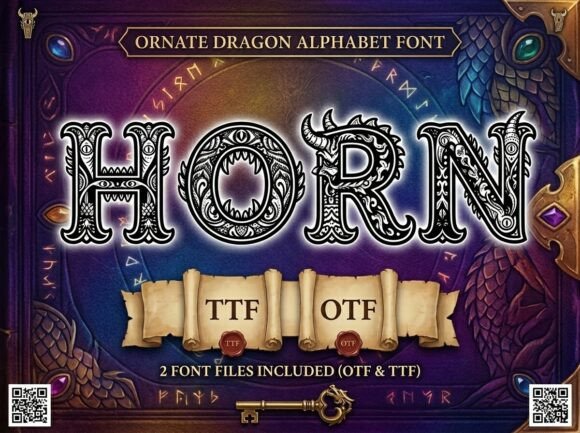
When you encounter Horn for the first time, it demands attention. This isn't just another serif font; it's a meticulously crafted ornate dragon alphabet that transforms standard capital letters into intricate works of dark mythology. Each character feels hand-carved from ancient stone or forged in mythical fire. The classical Roman stems provide a strong, readable foundation, but upon closer inspection, you discover the true artistry: dragon scales texture the vertical strokes, slithering tail flourishes replace standard serifs, and fierce reptilian eyes peer out from the cores of arches and counters.
The overall effect is a stunning three-dimensional quality. Deep structural shading and pristine outlines give each letter the weight and presence of a physical object. This is a display typeface designed for impact, not for body copy. Its personality is bold, mythical, and inherently epic. It speaks of ancient legends, heroic quests, and dark fantasy worlds. The appeal lies in its ability to instantly evoke a specific, powerful atmosphere.
Where Horn Truly Shines: Practical Applications
Knowing where to deploy such a specialized premium font is key to leveraging its strengths effectively. Horn excels in projects where you need to establish a strong, thematic identity immediately.
For Branding and Identity
Consider a craft brewery specializing in dark ales or a meadery with a medieval theme. Using Horn for the logo or primary wordmark instantly communicates the brand's essence—rugged, artisanal, and steeped in tradition. Similarly, a historical reenactment group, a fantasy-themed escape room, or a heavy metal band could build their entire brand identity around this typeface. It provides a memorable, recognizable anchor that resonates with a specific audience. For logo design, it works best as a centerpiece, often paired with a simpler sans serif font for supporting text to ensure clarity.
In Publishing and Editorial Design
This is Horn's natural habitat. Imagine it gracing the cover of a high-fantasy novel, its dragon-scaled letters promising an immersive world within. For editorial design, it's perfect for chapter headings, section dividers, or title pages in tabletop roleplaying game books. A publisher of historical leather-bound editions could use it for series branding or special imprint logos. The key is to use it for display purposes—titles, headers, pull quotes—where its detail can be appreciated without hindering the readability of longer passages.
Digital and Print Media
In the digital realm, Horn can make a website header or a landing page hero section unforgettable. For a game studio promoting a new tactical medieval game, this font sets the tone perfectly in the interface's main menu or promotional banners. Social media graphics for a fantasy author or a Dungeon Master community can achieve striking visual hierarchy with Horn as the headline font. In print, think of event posters for a Renaissance fair or a heavy metal gig—the font's inherent drama commands attention on a crowded poster or flyer.
Specialized Commercial Projects
Beyond the obvious, consider niche applications. A packaging design for artisanal hot sauces with names like "Dragon's Breath" or "Wyrm's Kiss" would be instantly elevated. A line of fantasy-themed merchandise, from T-shirts to tankards, could use Horn consistently to build a cohesive product line. Even a niche blog about ancient history or mythology could employ it for its banner to immediately signal its content focus to visitors.
Making Horn Work for Your Project
Integrating a font like Horn requires thoughtful consideration. It's a powerful tool, but like any specialized instrument, it must be used correctly.
Evaluating Fit and Readability
First, assess if the font's personality aligns with your project's core message. Horn conveys epic fantasy, dark mythology, and rugged antiquity. It would be a mismatch for a children's toy brand or a minimalist tech startup. Always test it in context. View it at the intended size—will the intricate details of the scales and eyes be visible? At very small sizes, some detail may blur, so it's best reserved for larger display applications. Check its legibility for the specific words you need; some letter combinations might create interesting but challenging visual interactions.
Mastering Font Pairing
The most successful uses of a display font like Horn involve thoughtful pairing. You need a complementary typeface to handle supporting text like subtitles, body copy, or captions. A clean, neutral sans serif font often works best, providing a stark contrast that lets Horn's details stand out while ensuring overall readability. A simple, elegant serif font could also work for a more classical feel. Avoid pairing it with other highly decorative, script font, or handwritten font styles, as this will create visual chaos. The goal is contrast and hierarchy.
Reviewing Technical and Licensing Details
Before purchasing, examine the font package. Horn is presented as a regular display typeface. Check what character set is included—does it cover the punctuation and numerals you need? Review the licensing terms carefully. If you're a small business owner planning to use it on merchandise for sale or a designer using it in client work, you need to ensure you have the appropriate commercial font license. Reputable foundries are clear about these terms. Think of it as investing in a reliable design asset that will deliver value across multiple projects.
Practical Design Observations
From a practical standpoint, give Horn space. Its detailed nature means it can feel crowded if set too tightly. Slightly increased letter-spacing can enhance its majestic quality. Use it for key phrases or titles where maximum impact is needed. Its strength is in its novelty and thematic power; overusing it on a single page can dilute its effect and overwhelm the viewer. Let it be the star of the show, supported by a calm, readable cast of typographic characters.
Horn is more than just a collection of letters; it's a gateway to a specific world. Used with intention, it can elevate a project from ordinary to extraordinary, creating an immediate and lasting connection with an audience that shares a passion for the epic, the legendary, and the mythical. It's a definitive example of how modern typography