Healer: Inject Playful Energy into Your Designs
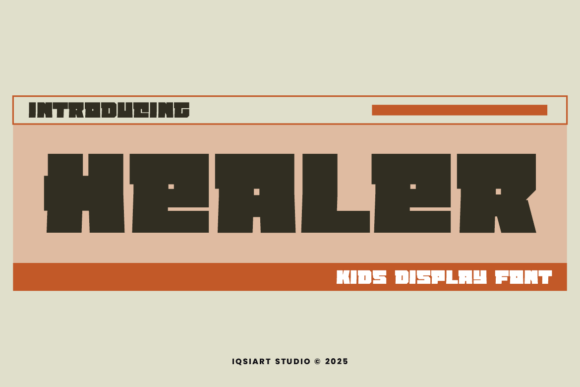
When you first glance at the Healer typeface, it doesn't just sit quietly on the page; it shouts with energy. In a world saturated with minimalist sans serif fonts and elegant script fonts, there is a specific demand for type that feels human, tactile, and unapologetically fun. Healer answers this call with a distinct retro flair. It is a premium font designed not just to be read, but to be felt. With its chunky, geometric letterforms and rounded terminals, it captures a specific era of nostalgia—think Saturday morning cartoons, vintage arcade cabinets, and hand-painted signage from the 1970s.
As a display font, Healer isn't meant for long blocks of body copy. Instead, it is the visual equivalent of a loudspeaker. It is designed to grab attention in headlines, titles, and logos. For graphic designers, brand strategists, and content creators, understanding how to deploy a font like Healer can be the difference between a design that blends in and one that connects with an audience emotionally. It bridges the gap between "childish" and "modern typography," offering a sophisticated playfulness that appeals to both kids and the adults who design for them.
The Anatomy of a Fun Typeface
Typography theory often focuses on kerning, ligatures, and serifs, but the practical application is about personality. Healer possesses a personality that is bold and friendly. Its visual characteristics are defined by soft edges and substantial weight. The letterforms are geometric, meaning they rely on basic shapes like circles and rectangles, but they are softened with curves that remove any harshness. This creates a typeface that feels safe and inviting—crucial traits when targeting a younger demographic or creating a brand identity that emphasizes approachability.
The "retro touch" mentioned in its description is vital. It taps into the current trend of vintage revival in graphic design. However, unlike some retro fonts that can look dated or difficult to read, Healer maintains a high level of legibility. The spacing is generous, and the shapes are distinct, ensuring that even at smaller sizes or on busy backgrounds, the message gets across. It avoids the trap of being too "gimmicky." Instead, it feels like a genuine design asset that adds texture and warmth to a project.
Strategic Applications: Where to Use Healer
Knowing where to use a creative font like Healer is just as important as liking how it looks. Because it is a display font, its strengths lie in high-impact areas. It works exceptionally well in environments where you need to establish a mood instantly. For entrepreneurs and small business owners, this font can be a secret weapon for standing out in crowded markets.
Here are some practical scenarios where Healer shines:
- Packaging Design: If you are selling organic snacks, children’s toys, or craft supplies, Healer can make your product pop on the shelf. Its friendly vibe suggests handmade quality and care.
- Editorial Design: In magazines or blogs focused on parenting, education, or lifestyle, using Healer for pull quotes or chapter titles adds a layer of visual interest that breaks up the monotony of standard sans serif or serif fonts.
- Web Design: On a website, Healer works perfectly for hero section headlines or call-to-action buttons. It draws the eye immediately, guiding the user toward the most important information.
- Social Media Graphics: The digital landscape is fast-paced. A bold font like Healer stops the scroll. It is ideal for Instagram stories, YouTube thumbnails, and event posters shared online.
It is also worth noting its utility in game design. The geometric nature of the letters mimics the pixel-art aesthetic without being pixelated, making it a perfect fit for mobile game titles, user interfaces, and character dialogue boxes.
Influence on Brand Perception and Readability
A typeface is the voice of your brand. Choosing Healer communicates specific values. It tells your audience that your brand is modern, energetic, and perhaps a little nostalgic. For businesses in the creative space—such as design agencies, art schools, or toy manufacturers—this font aligns perfectly with a brand identity that values creativity and innovation.
However, professional designers know that aesthetics must always balance with function. While Healer is a premium font with high production values, readability considerations are paramount. You wouldn't use Healer for a legal disclaimer or a technical manual. Its chunky nature is optimized for short bursts of text.
When used correctly, it enhances visual hierarchy. By pairing Healer with a neutral, geometric sans serif font for your body text, you create a clear distinction between headlines and content. This guides the reader's eye naturally down the page. The consistency of using a distinct display font for all headers across your marketing materials—from business cards to website banners—builds recognition. Over time, customers will associate that playful, retro shape with your specific brand.
Practical Guidance for Designers and Creators
Integrating a new typeface into your workflow requires more than just installation. To get the most out of Healer, consider the following practical steps:
- Evaluate Project Fit: Before applying Healer, ask yourself if the project tone matches the font's personality. If you are designing for a serious law firm, this is likely the wrong choice. If you are designing for a summer camp or a bakery, it’s a perfect match.
- Test Font Pairings: Display fonts rarely work alone. Experiment with pairing Healer with a clean sans serif like Helvetica or a sturdy serif font like Georgia for the body copy. The contrast between the playful header and the serious body text creates a professional balance.
- Review Included Styles: Check if the font family comes with different weights or styles. Using a bolder weight for main titles and a lighter weight for subtitles can add nuance to your layout without introducing a third font, keeping your design cohesive.
- Check Commercial Licensing: If you are using this for a client or a product you intend to sell, ensure you have the correct commercial license. Most premium fonts require a specific license for web use, app use, or physical merchandise.
Ultimately, Healer is more than just a collection of letters; it is a tool for storytelling. Whether you are a crafter selling on Etsy, a marketer building a campaign, or a publisher designing a book cover, this typeface offers a way to inject warmth and personality into your work. It proves that design can be serious business while still maintaining a sense of joy.